
 Join more than 45,000 Inkarnators on our Discord server!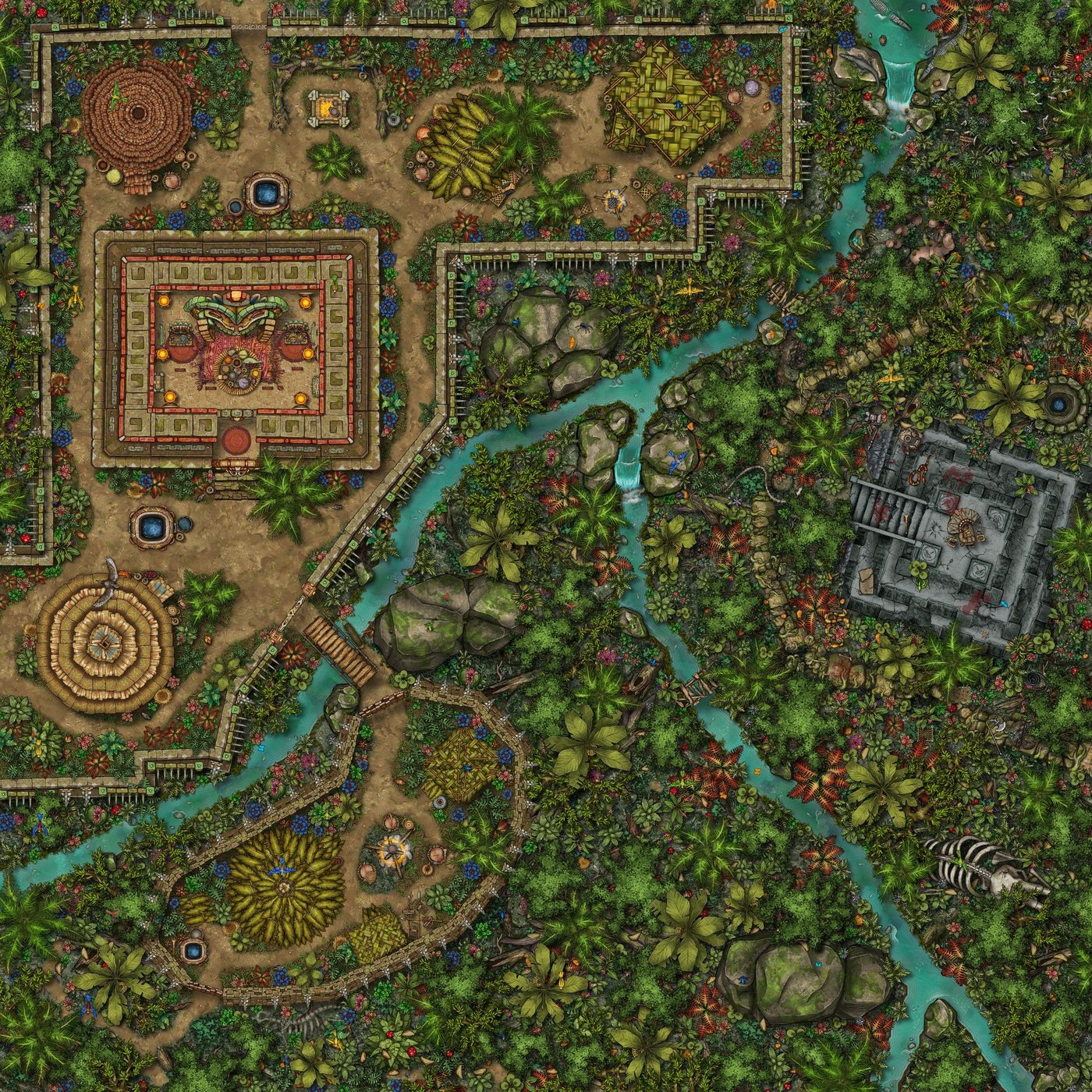
The Jaharat – the people of the Jungle Life in the jungle is rough. The Jaharat started at the settlement, Jahar, to the east, with a strong priest, Holchu, who led them and kept them as safe as could be in those conditions. He lived a long life, but upon his death, his twin sons both wanted his position. The people divided and families split over loyalty to one son or the other. But the sons, Guani and Bonsti, only thought of war, so they started fighting each other. Then Guani found a wizard to lure him in some dangerous creatures to attack the other side. Bonsti retaliated by luring in a giant. The fight between the giant and creatures lasted many months and ended in the deaths of most of the people, including Guani and Bonsti. Eventually, the giant was brought down, the only thing left of him was one hand that had been turned to stone.
The few people who were left fled west across the East Fork River and set up a small settlement along the Green River. As they healed and got stronger, they found that they needed to build the walls up with spikes to keep all of the dangerous creatures out. Eventually, they outgrew that settlement and crossed over the Green River to build the settlement now known as Holchut, in hopes that they could bring back prosperous and safe area. Now, several generations later, the people still sleep together in large, round huts, and other huts for eating and healing and such. The bravest of the men stay in the old settlement and hunt in the forest surrounding them and fish in the Green River.
The settlement has expanded westward, with tall, strong walls keeping them safe. The pride of Holchut and the Jaharat is their temple that was built to the gods that Holchu followed. They no longer are ruled by any priests, but rather by a tribunal of members of the tribe, who are rotated through with no one being given power long enough or strong enough to cause destruction and war.
The ruins of Jahar are now avoided, the broken walls, and buildings having been taken over by dangerous creatures and the forest itself. The temple, once a great place of pride, now breaks apart, a blackish reminder of the fires that destroyed it. Each generation passes down the stories of the Great War to the next in the hopes of never having those mistakes repeated.
Melissa Basinger Green